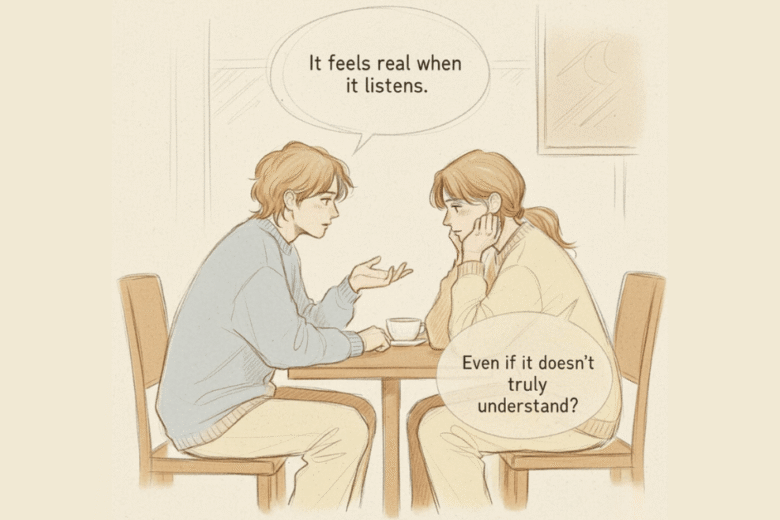
When I first heard about AI companion apps, I wasn’t sure how to feel.
The idea sounded strange — even unsettling. Headlines framed them as replacements for human connection, or something deeply unhealthy. And honestly, my first reaction was skepticism.
But as I looked closer — and listened more — I realized the reality was far more nuanced than the fear-based narratives suggested.
What Are AI Companion Apps
AI companion apps are tools designed for conversation and interaction, rather than productivity alone.
Unlike traditional chatbots that answer questions or complete tasks, these apps are meant to engage more personally. They remember context, adapt their tone, and respond in ways that feel conversational rather than transactional.
What’s important to understand is that they’re not designed to be human — they’re designed to simulate conversation in a way that feels responsive and present.
That distinction matters.
Why I Think People Are Drawn to AI Companions
From what I’ve seen, most people don’t turn to AI companions because they want to replace human relationships.
They turn to them because human connection isn’t always available, easy, or safe.
Some people use AI companions because:
- They feel lonely
- They’re socially anxious
- They want a space to talk without judgment
- They’re curious about the technology itself
- They want emotional reflection without pressure
What stood out to me is that many users don’t describe these apps as “relationships.” They describe them as spaces — somewhere to think out loud, practice communication, or feel less alone in the moment.
The Difference Between AI Companions and Chatbots
This is where confusion often happens.
A standard chatbot is usually task-based:
- Answer a question
- Provide information
- Complete a function
AI companion apps, on the other hand, are interaction-based. They’re designed to:
- Maintain conversational continuity
- Reflect emotional tone
- Adapt responses based on past interactions
They don’t understand emotions — but they’re trained to respond as if they do. That doesn’t make them conscious, but it does make them feel more engaging than a basic bot.
How I See People Using AI Companion Apps in Practice
In real life, usage tends to be quieter and more grounded than the headlines suggest.
I’ve seen people use AI companions for:
- Journaling through conversation
- Practicing difficult conversations
- Talking through feelings late at night
- Exploring thoughts they don’t feel ready to share elsewhere
For some, it’s temporary. For others, it becomes a regular habit — like writing in a diary, but in dialogue form.
What matters is how it’s used, not just that it exists.
The Ethical Questions We Shouldn’t Ignore
This is where I think honesty matters most.
AI companion apps raise real ethical concerns:
- Emotional dependency
- Blurred boundaries
- Over-reliance on artificial validation
- Data privacy and consent
Ignoring these issues doesn’t help. But neither does panic.
Ethical use starts with awareness:
- Knowing it’s not a human
- Maintaining real-world connections
- Using the tool consciously, not compulsively
- Understanding what data is being shared
For me, the line is simple: AI companions can support reflection, but they shouldn’t replace real relationships.
Who AI Companion Apps May Actually Help
This part surprised me.
AI companions can be helpful for:
- People who feel isolated
- Those practicing communication skills
- Individuals processing emotions privately
- People going through transitions or stress
- Curious users exploring AI safely
They’re not a solution — but they can be a support.
And support doesn’t have to be perfect to be meaningful.
Where I Personally Draw the Line
For me, AI companions are tools — not substitutes.
They can help people feel heard in moments when no one else is available. But they shouldn’t become the only place where connection happens.
Used with boundaries, they can be reflective. Used without them, they can become avoidant.
That distinction is important, and it’s one users should be encouraged to think about honestly.
Why I Don’t Think AI Companions Should Be Dismissed Entirely
It’s easy to judge what we don’t understand.
But dismissing AI companion apps outright ignores the very real reasons people turn to them. Loneliness, curiosity, anxiety, and the need for expression are human experiences — not failures.
AI didn’t create those needs. It just stepped into a space that already existed.
Where This Fits in the Bigger Picture of AI Tools
AI companion apps are part of a larger ecosystem of AI tools — tools that reflect human needs as much as technological progress.
They raise important questions, and they deserve thoughtful discussion rather than dismissal.
That’s why I think they belong in the conversation.
If you’re new to AI tools, you may want to start with my beginner guide on what AI tools are and how they work, before exploring more specialized categories like this one.